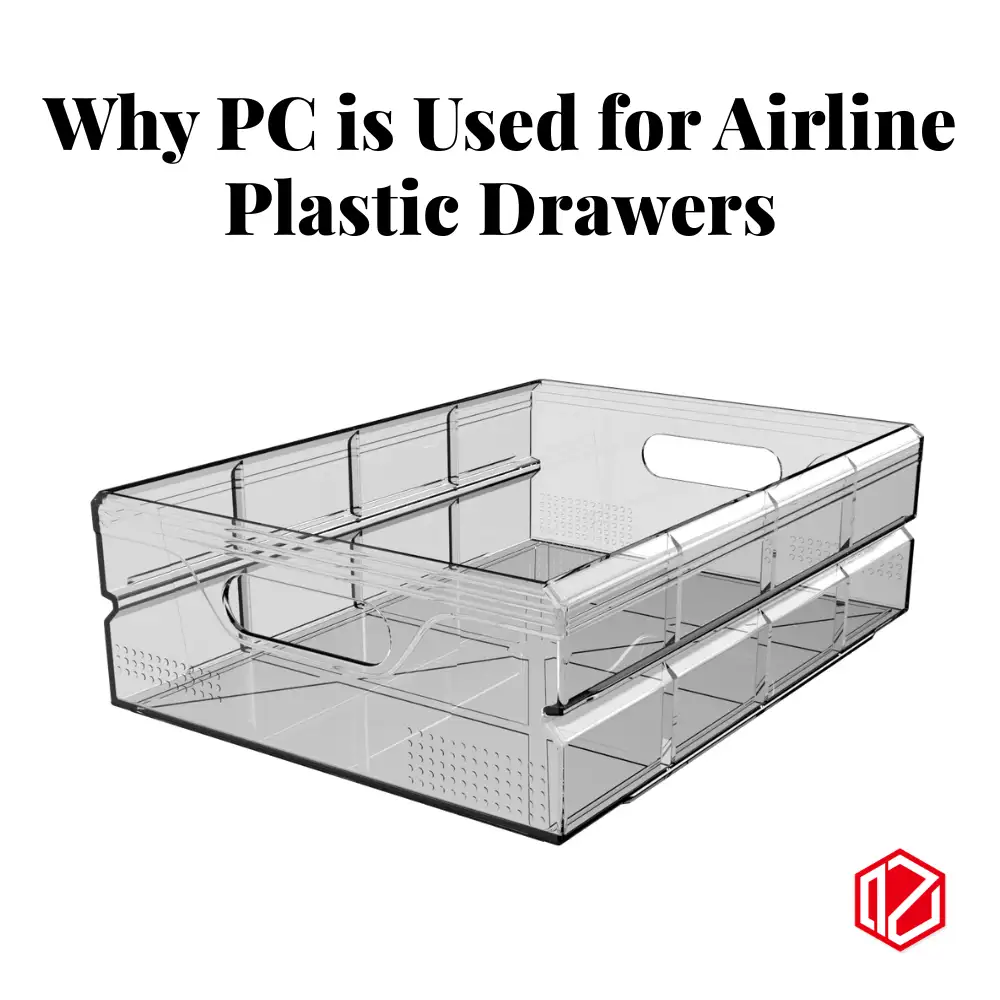
Polycarbonate is widely used in airline plastic drawer manufacturing because it offers a strong balance of clarity, toughness, and long-term durability. In airline trolley and galley systems, drawers are frequently handled, cleaned, and reused, so the material needs to perform well under repeated daily service conditions.
For airlines, aviation catering companies, and inflight equipment distributors, material choice is not only about appearance. It also affects service life, replacement frequency, operational reliability, and overall procurement value.
What Is Polycarbonate?
Polycarbonate, often called PC, is a type of engineering plastic known for its transparency and impact resistance. Compared with more basic plastic materials, it is often chosen for applications where both visibility and strength are important.
In airline trolley systems, this makes PC a suitable material for plastic drawers that need to remain clear, durable, and stable over time.
High Transparency for Better Visibility
One of the main advantages of polycarbonate is its high transparency. A clear drawer makes it easier for service staff to quickly identify stored items during inflight operations. This can improve convenience and efficiency in airline catering and galley service environments.
For projects where a cleaner and more premium-looking drawer is preferred, PC is often a better option than more opaque material choices.
Strong Impact Resistance
Airline drawers are used in demanding environments. They are repeatedly pulled out, pushed back, stacked, cleaned, and handled during service operations. Because of this, impact resistance is an important material feature.
Polycarbonate is known for its toughness and ability to withstand repeated use better than many standard transparent plastics. This helps reduce the risk of cracking or damage during normal service conditions.
Good Long-Term Durability
In airline trolley applications, durability is closely connected to replacement cost and operational consistency. A more durable drawer can help buyers reduce the frequency of replacement and maintain a more stable equipment standard over time.
Polycarbonate is often selected for projects where long-term performance matters more than simply choosing the lowest-cost material option.
Suitable for Repeated Cleaning and Service Use
Airline trolley drawers are commonly used in catering and galley environments where repeated cleaning is part of daily operation. Material stability is therefore an important factor.
Polycarbonate is valued not only for transparency and strength, but also for its suitability in service environments that require regular cleaning and repeated handling.
Why Buyers Choose PC for Airline Drawers
Buyers may choose polycarbonate airline drawers when they need:
- higher transparency
- stronger toughness
- better impact resistance
- a clearer and more premium appearance
- reliable performance in repeated airline service use
This makes PC a practical material option for airline, catering, and inflight equipment projects where quality and durability are priorities.
Is PC Always Better Than PP?
Not necessarily. PP and PC are both used in airline plastic drawers, but they serve different sourcing priorities.
PP is often chosen as a more economical and practical material option, while PC is preferred when buyers need better clarity, stronger impact performance, and a more premium-looking result.
The better material depends on the project goal, budget, and application environment.
Conclusion
Polycarbonate is used for airline plastic drawers because it offers a useful combination of transparency, toughness, and durability for airline trolley systems. For buyers who need a clearer and stronger drawer solution, PC is often the preferred material choice.
If your project requires a durable and high-clarity option for ATLAS trolley systems, you can explore our ATLAS Standard Airline PC Plastic Drawer for more specifications and OEM support.